Chinat · October 1, 2026
The giving that doesn't stop giving
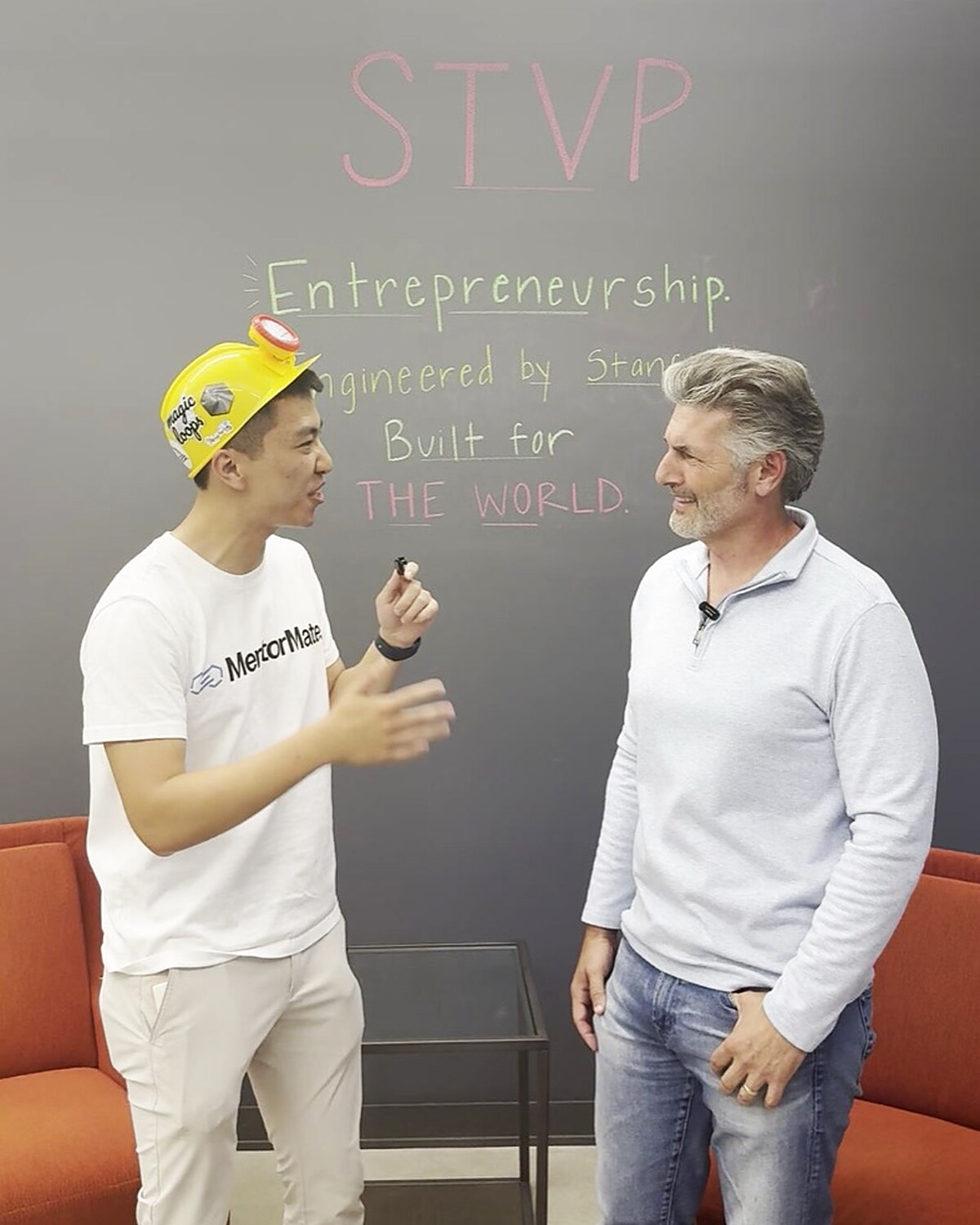
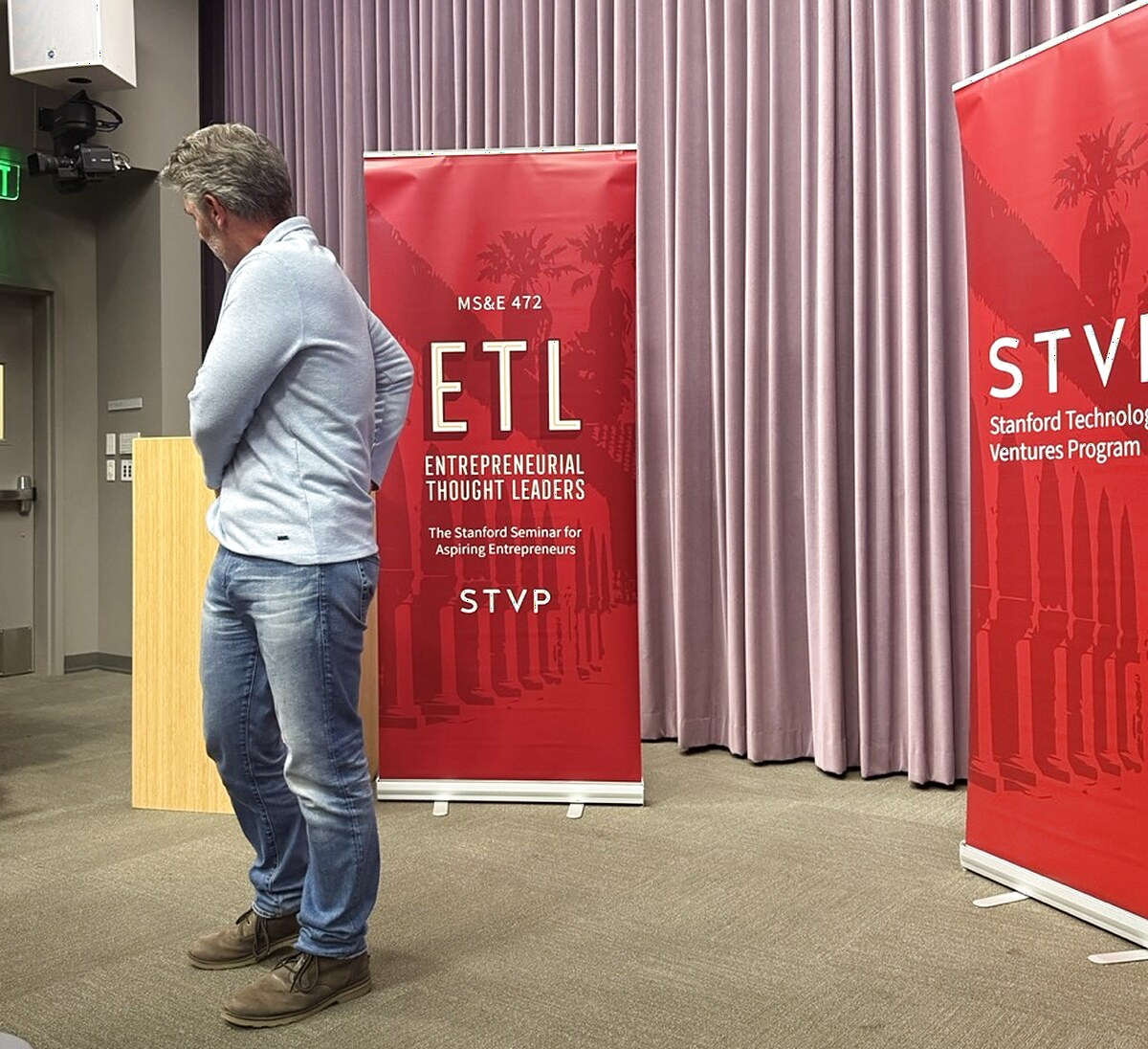
This Wednesday, we welcomed Adam Nash to ETL. Adam is the CEO and co-founder of Daffy, and before that he was at eBay, LinkedIn and Wealthfront, and it was really great to be able to hear from someone who has been building products for as long as he has. He opened by saying that he had sat in ETL himself about 30 years ago, and then warned us, "I'm not actually that funny."
The rap
Before the talk we recorded a short intro with him for the Stanford Founders channel, and I think that this is the part I will remember. I was in my hard hat (it is a fake hard hat, I bought it off Amazon), and he set it up himself, straight to camera: "Hi, I'm Adam Nash. I'm the CEO and co-founder of daffy.org. Who are you?"
Then it was my turn, and what I had for him was a rap.
Hi, my name is Chinat Yu It's nice to meet with you I'm an AI hacker, rapper, builder 'Cause that is what I do
I'm here with Adam Nash Giving, giving a big splash So if you wanna go and donate some cash Go to Daffy and hit smash
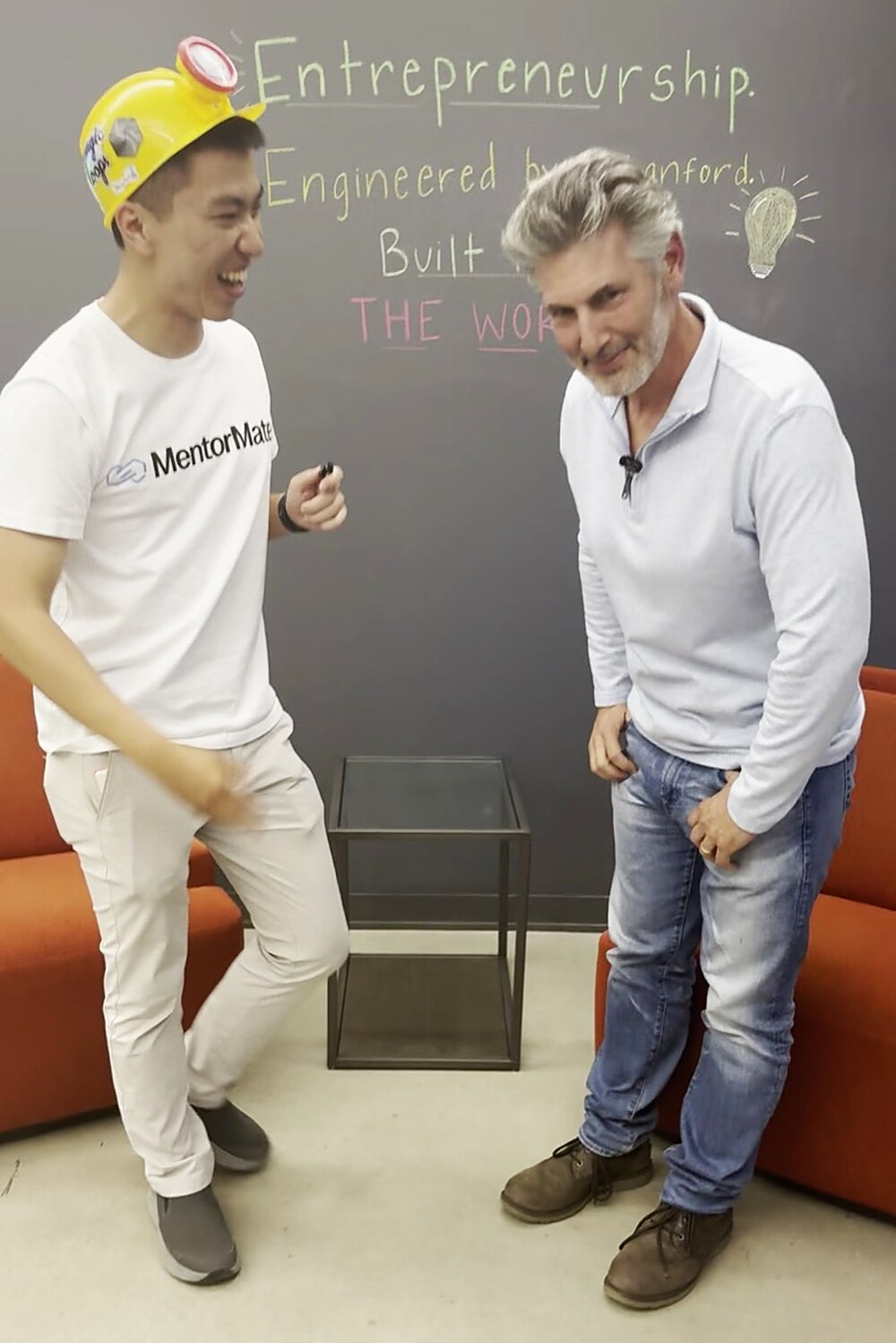
We had to do a couple of takes, because the first time I came in too early and he had to wait for his own line. He laughed and said, "See, this is why I didn't do drama." Then we ran it properly, and at the end he clapped and said thank you, and I think that is the thing about Adam that came through before he had said a single word about product.
What game are we playing?
The talk was about product leadership, and his first lesson was that a product leader's job is to win games. Most fights inside a team, he said, come from leadership never clearly defining two things: "what game are we playing, and how do you keep score." Some leaders tell a great story about the future but never give the team a number to know whether they are winning; others give the number with no story. You need both, especially because product managers have a lot of responsibility and very little authority. At LinkedIn he had a "two weeks, two months, two quarters" framework, and if a new product manager had not shown their team a win within the first two quarters, it was "almost irrecoverable."
Metrics movers, customer requests, and surprise
His second lesson was about prioritization, and it started at eBay, where a committee ranked more than 600 features every week by their financial value. eBay shipped perfectly, on time, every time, and yet he asked himself why the product didn't come out as brilliant as the process behind it.
His answer was to stop putting everything on one list. Most of the work should be metrics movers, the things your team is funded to move. Part of it should be customer requests, because customers need to see that you listen, even when those requests don't move the numbers. And there should always be room for delight, which he connected to something Tim Cook once said, that at Apple "our customers value surprise." Delight, Adam said, comes from someone "seeing something that they didn't expect, that they didn't know was possible, but then once they see it, they can't unsee it."
Find the heat
The part I keep thinking about is what he called finding the heat. "Heat is my word for strong emotions," he said, positive or negative. Engineers and business people both love numbers and logic, so teams end up optimizing clicks and screens and miss why people are there at all. When LinkedIn built Apply with LinkedIn, the job was not to make the form shorter. It was to amplify the hope (a better job, telling your parents, changing your life) and lower the fear (the gap in your résumé, someone else having the inside track). That's why they showed people their connections at the company.
He also made the case for simplicity, with a warning, Einstein's version of it: "make things as simple as possible, but not simpler." Push simplicity too far and one button ends up doing five things depending on how many times you press it.
My question
After the talk I got to ask him the question I had been sitting on. Steve Jobs said that if he had asked people about the iPhone they would have asked for more buttons, and Tesla famously didn't do a lot of customer research, so how do you draw the line between talking to your customers and surprising them?
His answer was really clear. "Your customers aren't experts in technology, they aren't experts in design. So you almost never want to actually build what they tell you. What you need to do is listen to what problem they're having," and what emotions are behind it. Customer feedback will get you incremental improvements, and those matter, but "if your strategy involves transformational change ... you're not getting that from the customer."
I think that this is especially important in the age of AI. When someone in the Q&A asked what happens when software becomes so abundant that customers can generate their own features in minutes, Adam pushed back on the premise: "I have not lived in a world in my lifetime where if you had a great idea in software, you couldn't get it built. ... Software in my world has always been a commodity." What changes, he thinks, is that a designer or an engineer can now make an idea real without a whole team, although the design AI gives you is "not perfect, or inspired necessarily." So the part that really matters is whether we are able to be better product designers and owners, and whether we really understand the people that we are building for. AI can do more of the building, but it can't find the heat for us.
Business models are destiny
His last lesson was the one that explained Daffy. "Business models are destiny. Design will not save you." As a company scales, the next thousand people you hire will optimize for however the money comes in. Most giving platforms charge a percentage of the assets you hold, which means that if you have a $100,000 account and donate $10,000, "your revenue just dropped 10%." The platform quietly earns more when people give less. Daffy charges a membership instead, around $3 a month for most people, so that the company does well when people give more, and he said that, admittedly on small numbers, Daffy is at over 170% net revenue retention.
So the name of this piece is his doing as much as mine. He built a platform where the giving keeps paying for itself, and then a man who runs a giving platform agreed to stand against a chalkboard and let a student in a hard hat rap at him about donating cash, and thanked him for it.
Comments
Loading…